
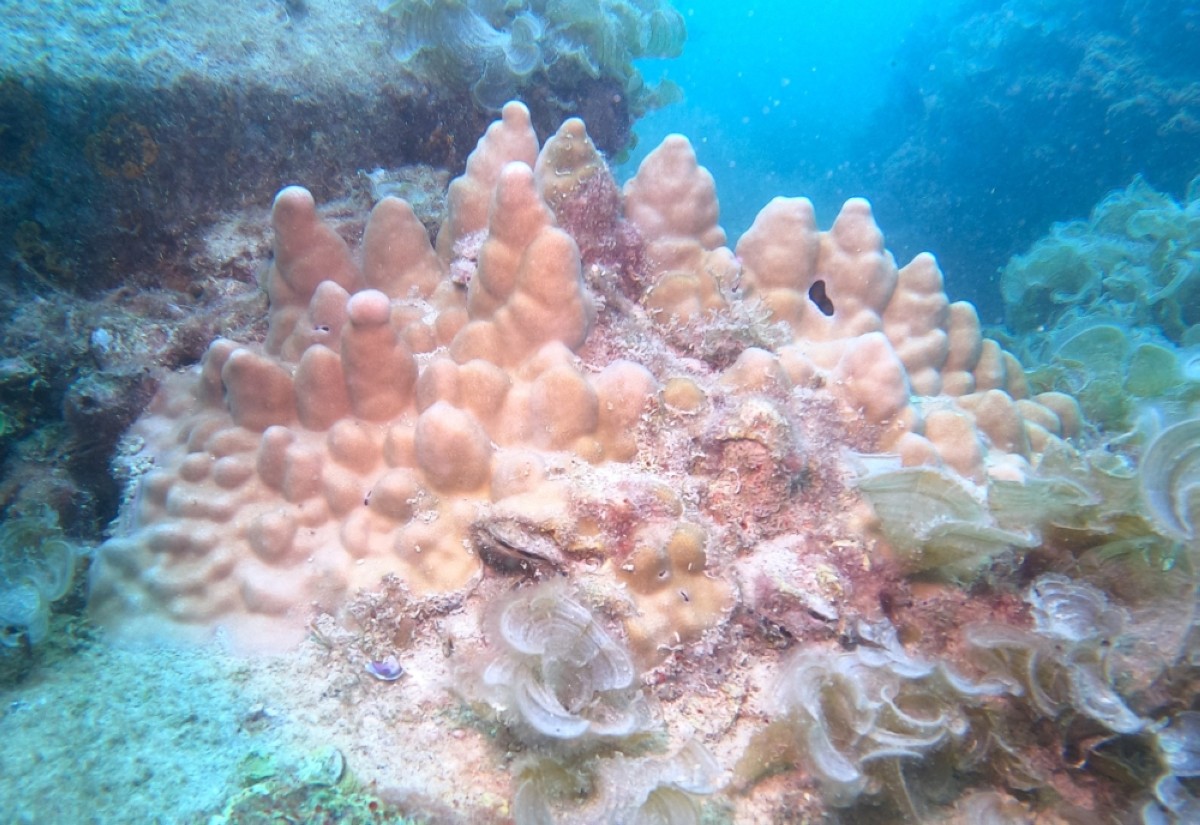
KUWAIT: The Kuwait Dive Team affiliated with the Environmental Voluntary Foundation has announced the observation of extensive and dense growth of coral and sponges, along with the settlement of thousands of marine organisms in the artificial coral reef colonies of the Jaber Marine Reserve in southern Kuwait. The team said the findings include shellfish, oysters, echinoderms, algae and a wide variety of fish species, reflecting significant ecological development within the reserve. Environmental projects manager Mahmoud Ashkanani told KUNA on Monday that the Jaber Marine Reserve is part of the team’s “Artificial Marine Reserves” initiative, the result of more than 30 years of voluntary work in coral reef conservation and development in Kuwait.
Ashkanani said the project has achieved notable success in recreating environments closely resembling natural coral reef ecosystems, characterized by high biodiversity, organism density and varied marine coloration. He added that the results highlight the importance of supporting similar initiatives by other entities, making use of time to establish marine reserves through the transformation of barren sandy seabeds into productive coral habitats.
He expressed satisfaction over the project’s outcomes, noting that the artificial marine reserves - particularly the Jaber Kuwait Marine Reserve - have met their objectives despite significant environmental and technical challenges. Ashkanani said the results confirm the effectiveness of artificial reefs in expanding coral coverage and revitalizing sandy seabeds, especially rocky areas that had become buried under sand due to water currents, coastal development and reclamation activities, which previously led to the loss and migration of marine life.
He explained that the project began in 1996 with the installation of solid concrete reef structures, which have since evolved in shape and size, reaching heights of up to three meters and depths ranging between 7 and 17 meters. The structures are distributed across 20 sites, including offshore locations near the southern islands and coastal areas. The largest site, located in Bnaider, extends approximately 300 meters and contains more than 90 composite and solid concrete units.
Ashkanani noted that the team conducts regular site visits to ensure the reserves remain free of fishing nets and debris that could harm marine life, in addition to monitoring biological growth and ecosystem development. He praised the support provided by the Environment Public Authority, as well as contributions from the Kuwait Oil Company, Mina Al-Ahmadi Port and the Kuwait National Petroleum Company in advancing the project. He also called on beachgoers and chalet visitors to help protect the reserves, avoid disposing of fishing gear or nets in the area, and report any violations or encroachments on coral reef sites to the relevant authorities. (KUNA)
Was this news helpful?
0 people liked this